
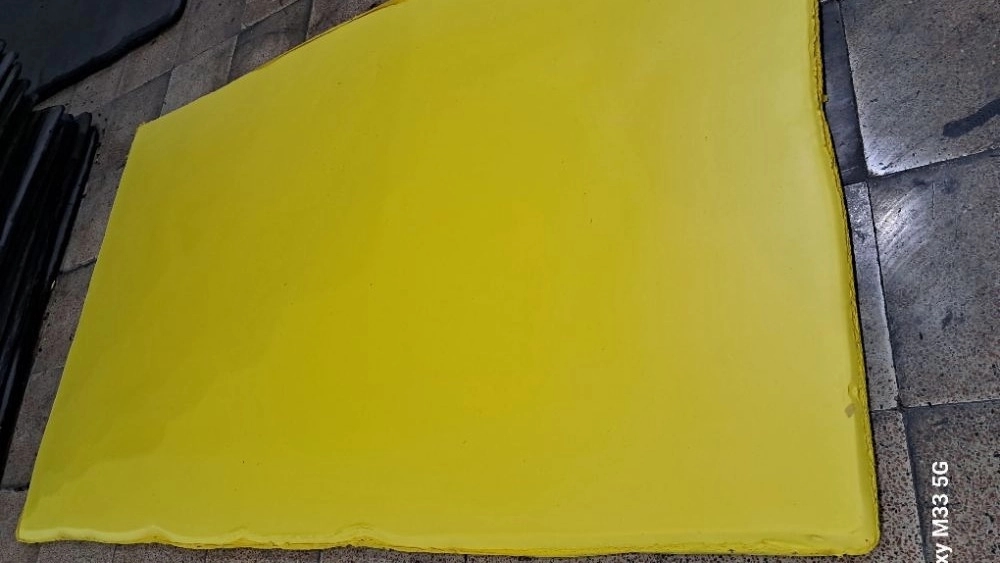
What is foam and how is its structure?
- Closed Cells: Air or gas is trapped inside the cells, resulting in high thermal resistance and great lightness.
- Open Cells: Air moves freely within the structure, which allows for greater sound absorption and flexibility.
The importance of density in foams
Definition of density
- Very low densities (e.g. 30–50 kg/m³) result in very light foams suitable for packaging, insulation or furniture applications.
- Medium densities (80–150 kg/m³) are used in products with relatively high mechanical strength.
- High densities (over 150 kg/m³) are for applications where compressive strength and longer life are important. is used
Compositions and raw materials in foam production
Base polymers
- Polyurethane (PU): The most common type of industrial foam that can be both flexible and rigid.
- Polyethylene (PE): Suitable for closed foams with moisture resistance.
- Polystyrene (EPS/EPP): Used for lightweight foams in packaging and insulation.
Blowing Agent
Foam production process
Preparation of materials
Mix and react
At this stage, the materials are mixed together and a chemical or physical reaction begins, which causes the creation of gas and the formation of a cellular structure. Accurate control of temperature, pressure, and reaction time is very important in this step so that the density and quality of the desired foam can be achieved correctly.
Shaping and curing
After the formation of the foam, the product is shaped and baked at a certain temperature and time to stabilize the cell structure and the foam reaches the expected mechanical resistance.
Quality control and tests
To evaluate the produced foam, various tests are performed:
- Density measurement: The actual density of the foam must match the design objective.
- Compressive and tensile strength test: To determine mechanical resistance in load-bearing applications.
- Thermal and acoustic properties: Depending on the type of open or closed cell, thermal performance and sound absorption are measured.
These tests ensure that the final product will last under real usage conditions.
Applications of light and resistant foams
Foams are used in many industries, the most important of which are the following:
construction
Foams are used for thermal insulation, sound insulation and building materials. Foams with a closed cell structure prevent the transfer of heat and moisture. (azarpadholding.com)
Packaging and transportation
Lightweight foams are used as shock absorbing materials to protect goods during transportation, especially when lightness and high impact resistance are required.
Furniture and comfort
Flexible foams are used for chairs, sofas and mattresses, which provide comfort and high durability with proper density.
Automotive and precision industries
Specialized foams are used in car parts to absorb impact energy, sound insulation, and lighten the body.
Foam production in Iran: the example of "Firozi Foam Roll" company
One of the active producers in Tehran is Firozi Foam Roll, which offers all kinds of foam sheets and rolls, EVA sheets, adhesive foam, shock absorbers and related products in the market. This company responds to the needs of various industries in Iran by providing various foam products. (fomrollfirozi.ir)
The products of this collection include the following:
- Foam roll and furniture wrap
- Foam sheet and granules
- Compressed and soapy foam
This variety of products shows the wide range of foam applications in the furniture, packaging and construction industries. (fomrollfirozi.ir)
Challenges and solutions in the production of light and resistant foam
Production challenges
Optimization solutions
- Improve chemical compositions and additives to increase resistance to harsh conditions.
- Control production parameters such as temperature and reaction time to achieve target density.
- Using advanced new technologies to achieve very low densities while maintaining strength.
conclusion
Light and resistant foams are one of the most important industrial materials with wide applications in various industries. The density and percentage of the cell structure is one of the key factors determining the mechanical and functional properties of these materials, and by using the right materials and accurate control of the process, it is possible to produce products with high quality and efficiency. Domestic producers such as Firouzi foam roll play an important role in meeting the needs of the country's industries by providing a variety of products. (fomrollfirozi.ir)