In today's fast-paced world, industries are always looking for solutions that can reduce costs and minimize environmental effects while maintaining product quality. In the meantime, industrial multilayer foam, as one of the most innovative engineering materials, plays a key role in the transformation of the packaging, building and automotive industries. Tehran, as the industrial and economic capital of Iran, is the main center of production and consumption of these materials, where many factories and production units are active. Multilayer foams, by combining the mechanical and insulating properties of different layers, are a smart answer to modern complex needs. This article deals with the comprehensive review of industrial multi-layer foam, its types, applications and its special position in Tehran industry.
First chapter: Knowledge of multilayer foam and its engineering structure
Multi-layer industrial foam, unlike traditional single-layer foams, consists of a combination of two or more layers of different materials with different properties. This structure usually consists of a lightweight core layer (such as polyethylene or polyurethane foam) and two or more tough outer layers. The purpose of this combination is to achieve a composite material that is both light and has high tensile and compressive strength. In Tehran, leading manufacturers use extrusion and lamination technologies to connect layers under precise pressure and temperature. This connection should be such that the layers do not separate due to impact and vibration. One of the prominent features of these foams is the ability to customize their thickness and density, which varies depending on the type of application. For example, in the automotive industry, where parts are sensitive, multi-layer foams with higher density are used to protect against heavy impacts.
Second chapter: types of industrial multilayer foam and unique features
In the industrial market of Tehran, the diversity in the production of multi-layer foams is very impressive. The most important types of these foams are: 1. Polyethylene multilayer foam (XLPE): This type of foam has excellent resistance to moisture and impact due to its closed cell structure. It is usually produced in multilayer form with metallized or polyester films to double its strength. 2. Polyurethane (PU) multilayer foam: These foams are mostly used for thermal and sound insulation. Low density and high flexibility are its features. 3. Honeycomb multilayer foams: Although they are not foams, they are classified as multilayer insulations and are used in the aerospace and transportation industry in Tehran. 4. Aluminum multi-layer foams: The combination of foam with aluminum layers creates a high reflectivity against infrared rays and is very popular for insulating floors and gabled roofs in residential buildings in Tehran.
Each of these types has unique properties that make them suitable for specific uses. Choosing the right type of foam is a specialty that engineers in Tehran's industrial units perform with high precision.
The third chapter: Wide applications of multi-layer foam in Tehran industries
Tehran, as the hub of the country's industry, is the main consumer of multi-layer foams. The uses of this product can be categorized into several main sections:
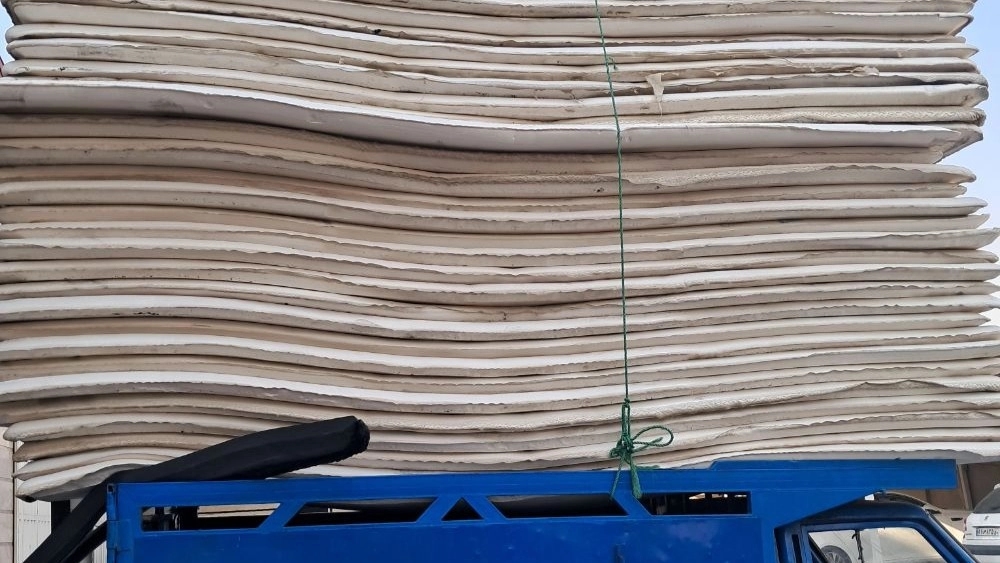
1. Packaging and logistics industry: Perhaps the most widely used use of multi-layer foam is in the packaging of sensitive products. From electronics and appliances to glasses and breakable containers, they all need the protection that multi-layer foams provide. In large logistics warehouses in Ray and Varamin, it is inevitable to use multi-layer foams to prevent damage during heavy transportation. These foams protect the original product by absorbing impact energy.
2. Construction and insulation industry: According to Tehran's climate and the need to manage energy consumption, the use of multi-layer foams as thermal and cold insulation is increasing. These foams are used in prefabricated walls, false ceilings and floors. Reflective layers in these foams prevent heat from entering in the summer and leaving it in the winter, which directly affects the reduction of energy bills.
3. Automobile and parts manufacturing industry: Large automobile manufacturers and parts manufacturers in the suburbs of Tehran (such as Karaj and Saveh) use multi-layer foams for sound insulation of the cabin, upholstery of boxes and packaging of spare parts. Reducing noise pollution in the car is one of the quality indicators that can be achieved by using these foams.
4. Medical and health industry: Multilayer foams play a vital role in the production of medical equipment and boxes for carrying temperature-sensitive drugs (such as vaccines). These foams are an ideal option for this sensitive industry due to their antibacterial properties and temperature control capabilities.
Chapter 4: Advantages of using industrial multilayer foam
Using multilayer foams has countless advantages compared to traditional materials such as wood, cardboard or ordinary foams. The first and most important advantage is simultaneous lightness and strength. This feature reduces the final weight of the package or product, which creates significant savings in transportation. The second advantage is insulation. These foams are resistant to moisture, heat, cold and sound. This increases the useful life of products. The third advantage is durability. Multi-layer foams do not decay and show good resistance to chemicals. Also, many manufacturers in Tehran have moved towards the production of recycled and environmentally friendly multilayer foams, which shows the social responsibility of Iranian craftsmen.
Chapter 5: Challenges and the future of multilayer foam industry in Tehran
Despite all the advantages, the multilayer foam industry in Tehran also faces challenges. Fluctuations in the price of raw materials (polymers) is one of the biggest obstacles that directly affects the finished product price. Also, the need for advanced technologies and up-to-date machinery to produce quality layers requires heavy investment. However, the future of this industry in Tehran is very bright. Moving towards smart cities and green buildings, the need for advanced insulation is increasing. Also, the development of electronic industry and e-commerce will increase the demand for safe packaging. It is predicted that in the coming years, we will see the introduction of nanotechnology into the structure of multilayer foams, which will multiply their properties.
conclusion
Industrial multi-layer foam is a symbol of the advancement of technology and material engineering in Iran. With the creative combination of different layers, this product has provided a comprehensive solution to the problems of packaging, insulation and product protection. Tehran, with its advanced factories and expert workforce, is on the way to becoming one of the production hubs of these products in the region. The use of multi-layer foams not only improves the quality of products, but also takes an important step towards preserving the environment and sustainable development by saving energy and reducing waste. Iranian craftsmen, relying on local knowledge and global experience, are able to produce the best type of multi-layer foam according to the needs of customers.